

Senate Bodies are: Marshal of the Senate, Presidium of the Senate, Council of Seniors, Senate Committees.
Marshal of the Senate
Marshal of the Senate is elected by an absolute majority of votes at the first session of a newly elected Senate. Deputy Marshals are likewise elected during the same session.
The Marshal represents the Senate and guards its rights and dignity. The Marshal plans the work of the House and prepares a draft agenda, in consultation with the Council of Seniors. He or she convenes and presides over the sittings of the Senate and monitors their progression. The Marshal supervises the work of the Senate committees and instructs them to examine particular issues. The Marshal assists senators in exercising their mandates. In addition, the Marshal convenes and presides over the meetings of the Presidium of the Senate and of the Council of Seniors.
After consulting the Presidium of the Senate and the Rules, Ethics and Senatorial Affairs Committee, the Marshal also appoints and dismisses the Head of the Chancellery of the Senate, provides the Chancellery with its statute and drafts its budget.
As envisaged in the Constitution, the Marshal of the Senate takes on the duties of the President when the Marshal of the Sejm is unable to do so. The Marshal of the Senate may preside over the sessions of the National Assembly instead of the Marshal of the Sejm.
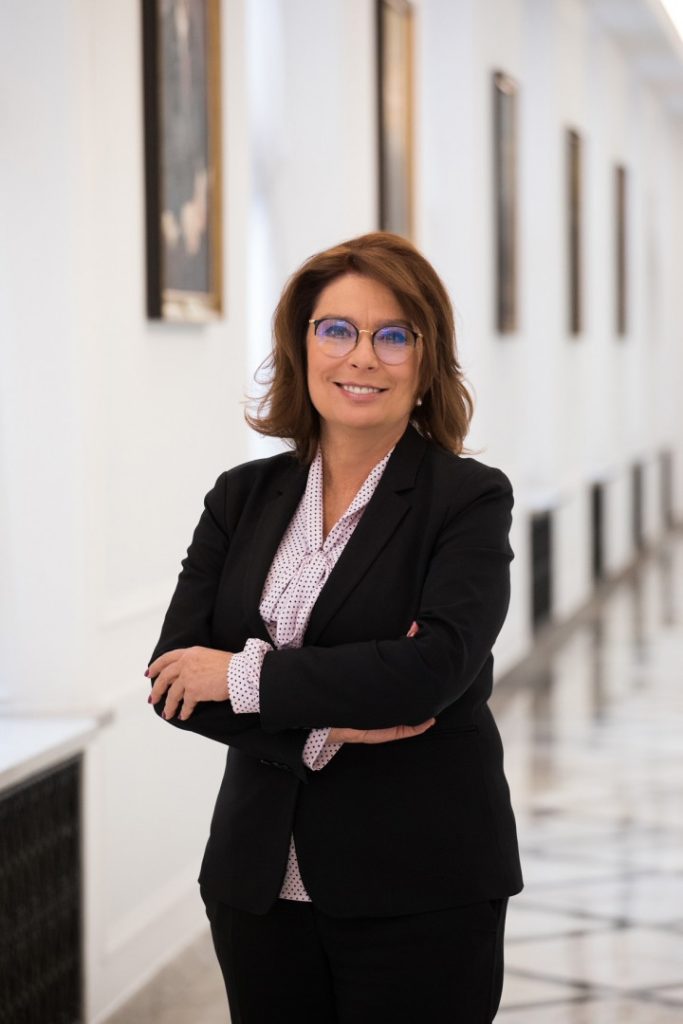
Małgorzata Kidawa-Błońska, Marshal of the Senate of the eleventh term
Born on 5 May 1957 in Warsaw. In 1983, she graduated in sociology from the Faculty of Philosophy and Sociology at the University of Warsaw.
From 1986 to 1991, she worked in the literary department of the Karol Irzykowski Film Studio. From 1994 to 2005, she was Vice-President of Gambit Production, a studio producing films and television programmes; the studio produced, among other films, the film “Skazany na bluesa” (Doomed to the Blues) devoted to Ryszard Riedel, the singer of the Dżem band.
From 2002 to 2005, she was a councillor in the Warsaw City Council. Was a member of the fifth-to-ninth term Sejm (from 2005 to 2023); a member of the Culture and Media Committee during these terms. In 2015, she was elected Marshal of the seventh term Sejm. In the eighth and ninth term Sejm, she was Deputy Marshal. In 2014–2015, she served as Secretary of State in the Chancellery of Prime Minister. In 2014, she was spokeswoman for Donald Tusk’s government and in 2015 for Ewa Kopacz’s government.
Member of the Civic Platform and Deputy Chairperson of the party since 2021.
In the eleventh term Senate – member of the Culture and Media Committee.
The Presidium of the Senate
The Presidium of the Senate consists of the Marshal and Deputy Marshals. The Presidium is responsible, among other things, for interpreting the Rules and Regulations of the Senate, assigning matters to specific committees of the Senate, providing opinions on matters brought forward by the Marshal, and ensuring that senators fulfil their duties. The Presidium also establishes the rules of providing academic or scientific advice to the Senate. As far as public tasks in the area of providing care to the Polish diaspora and Poles abroad are concerned, the Presidium defines the principles under which these tasks are delegated, considers offers for their implementation, and procures the implementation of such tasks after receiving an opinion from the Emigration Affairs and Contacts with Poles Abroad Committee.
The Head of the Chancellery of the Senate and persons invited by the Marshal may take part in the meetings of the Presidium of the Senate in an advisory capacity.
The Council of Seniors
The Council of Seniors is composed of the marshal, the deputy marshals and senators – representatives of the senate clubs. The Senate clubs and groups may jointly appoint one representative to the Council of Seniors. In addition, the Council of Seniors comprises representatives of parliamentary clubs which include at least seven senators.
The Council of Seniors is convened to agree on issues such as Senate agendas, work schedules and dates of sittings. Moreover, the Council of Seniors examines and presents proposals on how the debate and the session of the House should be conducted.
Senate Committees
The basic work of the Senate is carried out in committees. The acts passed by the Sejm are submitted first to the Senate committees, which also examine draft acts authored by senators.
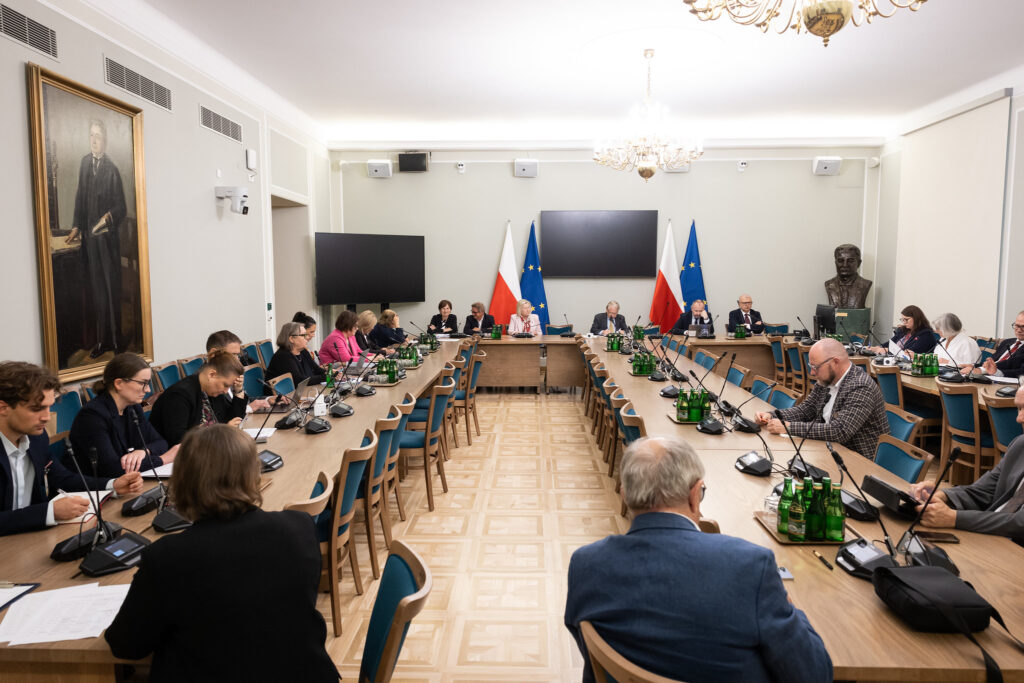
A committee may comprise subcommittees, which are set up to look into specific issues. The Senate may also appoint special committees.
Under the Rules and Regulations of the Senate, a senator is obliged to be a member of at least 1 and no more than 2 standing committees. He or she may also take part in the work of other committees, but without the right to vote. The obligation to be a member of a committee does not apply to the Marshal and Deputy Marshals of the Senate.
A committee is usually composed of between several and a dozen or so senators. For each day of unexcused absence at a session of the committee, the salary and parliamentary allowance of the senator concerned is reduced by one-thirtieth. The Senate appoints and removes the chairmen of its committees, who are responsible for organizing their work and activities. Vice chairpersons are elected by members of the committees themselves. The committees may work in joint sessions. In such a case, the chairman of one of the committees presides over the session.
The committees are mainly tasked with examination of acts and compilation of reports on the Senate’s draft resolutions concerning these acts. The committees may propose that the Senate should either:
- − accept an act without amendments,
- − amend the act, or
- − reject the act.
A committee’s decisions to that effect are always taken by a majority of votes, in the presence of at least one-third of its members. The relevant report is presented during a plenary sitting of the Senate by a senator chosen by the committee. During their work on specific acts, the committees may consult the Legislative Office of the Chancellery of the Senate or seek opinions of experts and groups and organisations interested in a given issue.
A special procedure is followed when a budget act is to be passed. The relevant sections of the act are examined by committees competent in specific areas. Their opinions are forwarded to the Budget and Public Finance Committee, which prepares a report and a Senate draft opinion on the budget act. The committee may propose amendments to this act or they may accept its contents without proposing amendments.
The Senate committees may draft their own acts (legislation may likewise be initiated by a group of 10 senators). Any such drafts are examined by the competent committees and the Legislation Committee. The ultimate decision on submission of a given draft to the Sejm is taken by the Senate.
The committees are not only involved in legislative work, but also take part in topic-specific sessions and seminars to discuss issues connected with the objectives of their activities. In addition, they take position on issues which they consider important and communicate it to the relevant bodies or institutions.
Minutes and verbatim records are produced from every session of a Senate committee. Transcripts are available on the website of the Senate. At the end of their term of office, the committees draw up reports on their activities.